
IPAF Training in India by Siri Techno fab
Just another Complete Elementor Demos - Phlox WordPress Theme site
Just another Complete Elementor Demos - Phlox WordPress Theme site
Get certified to operate Mobile Vertical (3a) platforms safely. Essential training for electric and diesel scissor lifts used in maintenance and construction.
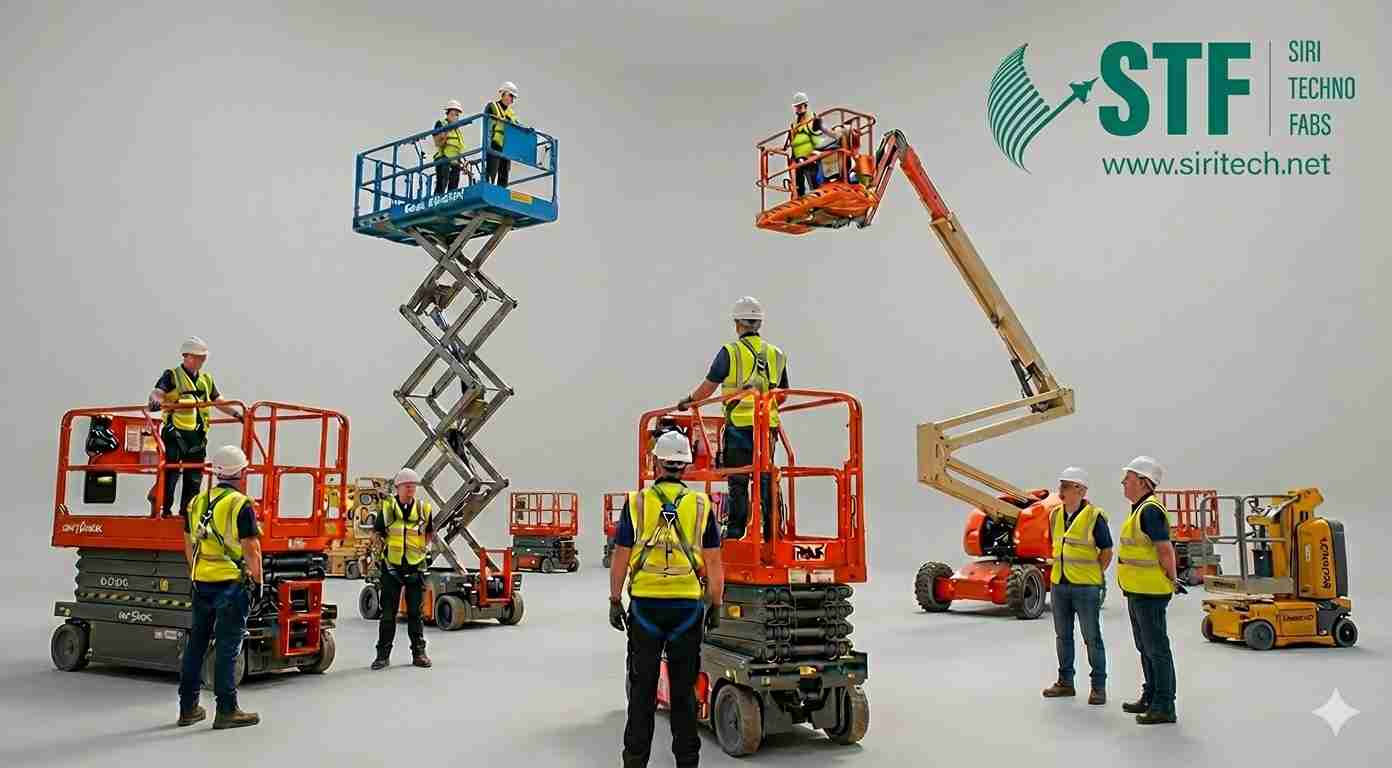
Training for IPAF Category 3a: Mobile Vertical platforms. Learn to elevate safely for indoor fit-outs or outdoor cladding work.
The core module for scissor lifts. Covers all self-propelled vertical lifts that can be driven while elevated. Focuses on stability, ground conditions, and maneuvering.
Most operators choose to do the ‘3a & 3b Combo’ course. It covers both Scissor Lifts and Cherry Pickers in a single day for maximum value.
Often used in offices. We can include Push Around Vertical (PAV) familiarisation with your 3a course if required.
Learn the differences between battery-powered slab scissors for indoor use and rough-terrain diesel scissors for construction sites.
We train you on the specific vertical lifts you will encounter on site.
Compact, battery-operated machines with non-marking tyres. Standard for warehouse and indoor maintenance.
Larger, 4×4 machines with outriggers/jacks for stability on uneven ground. Used for cladding and steelwork.
Slimline lifts designed to fit through standard doorways and tight racking. Essential for facility management.
Simple steps to become a qualified scissor lift operator.
Select the ‘Mobile Vertical (3a)’ course. We recommend adding ‘3b’ for a full license.
Classroom session covering stability, weight limits (SWL), and pre-use inspection.
Hands-on training. Learn to drive, elevate, and extend decks safely.
Pass the assessment and receive your digital PAL Card valid for 5 years.
Tell us where you are working, and we’ll confirm the category.
Note: 3a covers almost all mobile scissor lifts.
They are the most common access platform, but tipping risks make training vital.
Understanding specific risks like pothole protection and load distribution.
Scissor lifts are susceptible to tipping if used on slopes or in high winds. Our training drills the importance of checking ground level and wind speeds.
Driving through doorways or near overhead beams presents a crush risk to the operator. We teach situational awareness to prevent overhead entrapment.
For electric models, safe charging procedures are critical to prevent fire risks and ensure the machine lasts a full shift. This is covered in the theory module.
“I use scissors daily for HVAC work. The course taught me things about the emergency lowering valve I never knew. Very useful.”
“Good course. The instructor explained why we don’t usually need harnesses in scissors, which cleared up a lot of confusion on our site.”
“Training on the rough terrain scissor was great. It’s a different beast to the little electric ones I was used to.”
Common questions about Category 3a training.
Generally, no. Unless a specific site risk assessment requires it, IPAF guidance states that harnesses are not standard in vertical lifts (3a) due to the lack of catapult risk.
Yes, Category 3a covers Mobile Vertical lifts, which are designed to be driven while elevated. If the machine cannot drive while up (has outriggers), it falls under Category 1a.
Technically PAV is a separate category, but holding a valid 3a license often demonstrates sufficient competence for PAVs (subject to familiarisation). Ask us about adding PAV to your card.
The 3a license covers you for scissor lifts of any height. However, moving from a small 6m electric scissor to a large 20m diesel one requires a familiarisation handover.